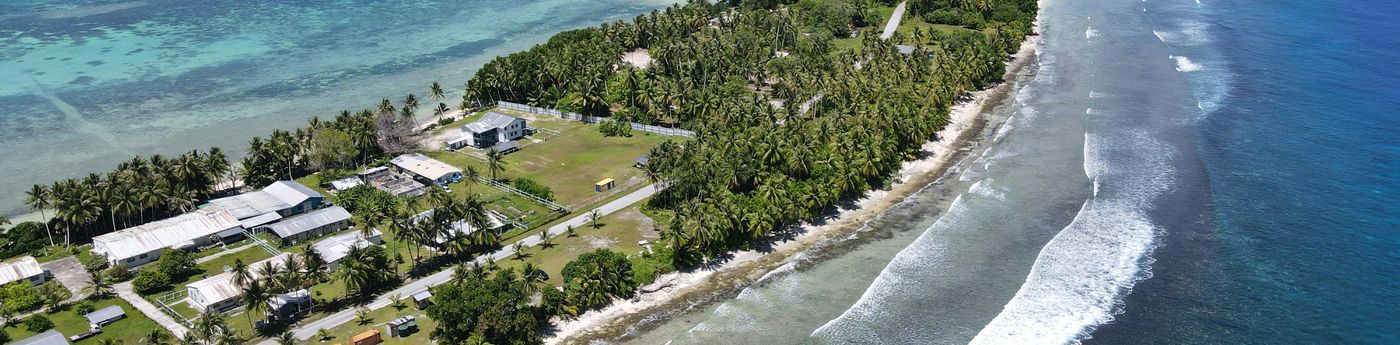
“Global institutions cannot be effective if they are not representative. SIDS must have a seat at every table, and your voices must be heard.” - António Guterres, UN Secretary General
In 1992, the UN Conference on Environment and Development recognised a select group of countries - Small Island Developing States (SIDS) - as holding a unique set of characteristics making them vulnerable to climate, economic, and social shocks. It’s been 32 years since, and the challenges SIDS face have been met with the implementation of several programmes - the Barbados Programme of Action, 1994; Mauritius Strategy, 2005; and Samoa Pathway, 2014.
The 4th International Conference on SIDS, which happened in May, yielded additional support mechanisms to complement the above, one such being the Global Small Island Developing States (SIDS) Debt Sustainability Support Service, a financial compact to help meet fiscal resilience challenges.
While discussing complex development strategies can foster innovation in policy frameworks, it's crucial to highlight the challenges SIDS face and their importance to our planet's health to effectively support them. They are not economic powerhouses which draw widespread interest from global markets, but delicate atolls, volcanic island chains, and ex exploitation colonialist states – all of which require more attention in the global sphere of development.
The following provides a brief overview of SIDS, the unique value they bring to our planet, and the challenges they face.
Small Island Developing States (SIDS)
What are they? - SIDS are a group of 39 states and 18 associate members of the UN regional commissions that have similar social, economic, and environmental vulnerabilities.
You can find a list of all 39 SIDS here: https://www.un.org/ohrlls/content/list-sids
Where are they? - They are located across several of the world’s largest bodies of water – The Caribbean, The Pacific, The Atlantic, Indian Ocean, and The South China Sea.
Jointly, SIDS have a population of 65 million people, just under 1% of the world’s population.
SIDS have contributed less than 1% to global carbon emissions – like many other developing countries, they suffer disproportionately from impacts of climate change.
SIDS’ debt servicing costs have been 18 times more than what they have received in climate finance from 2016-2020.
Why are the SIDS important?
They are crucial to global ocean ecosystems, being home to a significant portion of the worlds biodiversity.
They are home to many endemic species – There are nearly 8000 species endemic to the Caribbean Islands alone.
Islands are well-known locations of adaptive radiation, where species diversify to fill empty niches.
Place of outstanding natural beauty with significant cultural and historical importance.
What challenges do SIDS face?
Over reliance on external markets for import of goods due to narrow resource base.
High import and export costs due to remoteness from major market hubs.
The economies of SIDS are hugely vulnerable due to their lack of economic diversification – unlike many continental states, they lack economic alternatives. Average SIDS GDP contracted on average by 6.9% in 2020 at the start of the pandemic, compared to 4.8% across all other developing nations.
Over 40% of SIDS are verging on or already in debt distress, whilst 70% exceed the debt-to-GDP sustainability threshold of 40% under the IMFs Debt sustainability Framework.
Beyond physical resource constraints, SIDS face challenges around the building of technical capacity to implement solutions which address many of their unique issues.
Climate change poses the largest challenges for these countries. The slow onset of sea level rise and changing temperatures of land and marine environments pose long term threats.
SIDS account for two-thirds of the countries with the highest relative annual losses due to climate-related disasters.
This challenge is less talked about. Whilst historically SIDS have been less prone to political instability events, as globalisation spheres encroach on even the most isolated island nations, many are being dragged into international power rivalries. French neo-colonialist ideals in New Caledonia have been met with violence from native Kanak people in recent weeks.
Sources